By Freya Peters
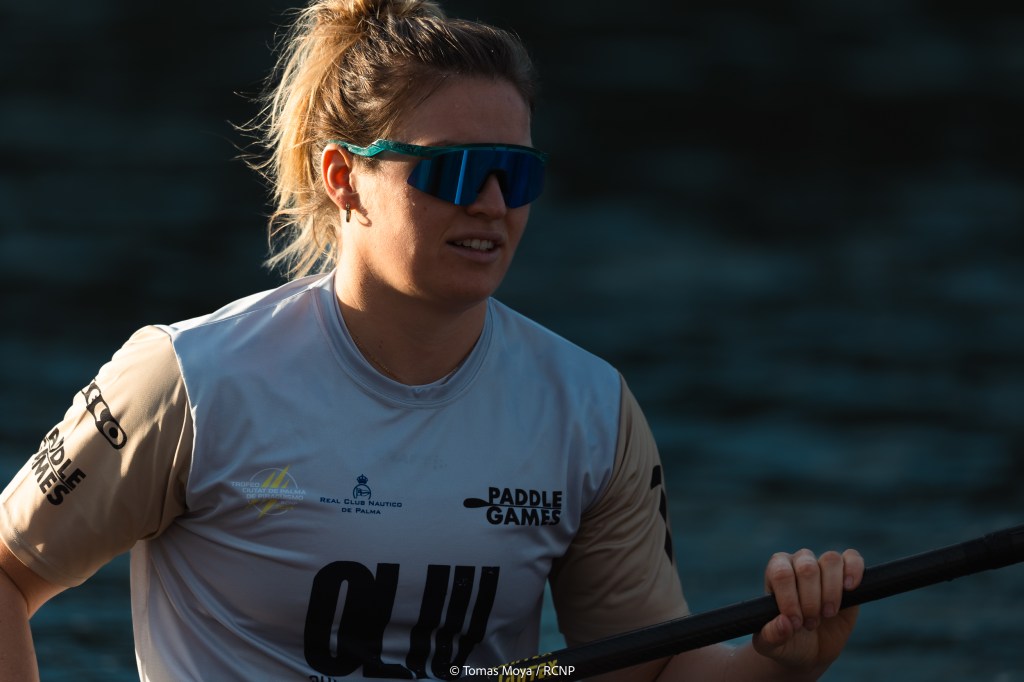
Back in a boat just weeks after giving birth, two-time Olympic sprint kayak medalist Jule Hake talks about balancing motherhood with a high performance lifestyle and her ambitions for 2026 ahead of this year’s Paddle Games.
After representing Germany in two Olympic Games, Tokyo and Paris, Jule Hake embraces a different challenge as she prepares to qualify for her third Games. Becoming a mother this winter has added a new dimension to Jule’s life as she begins her return to training after giving birth.
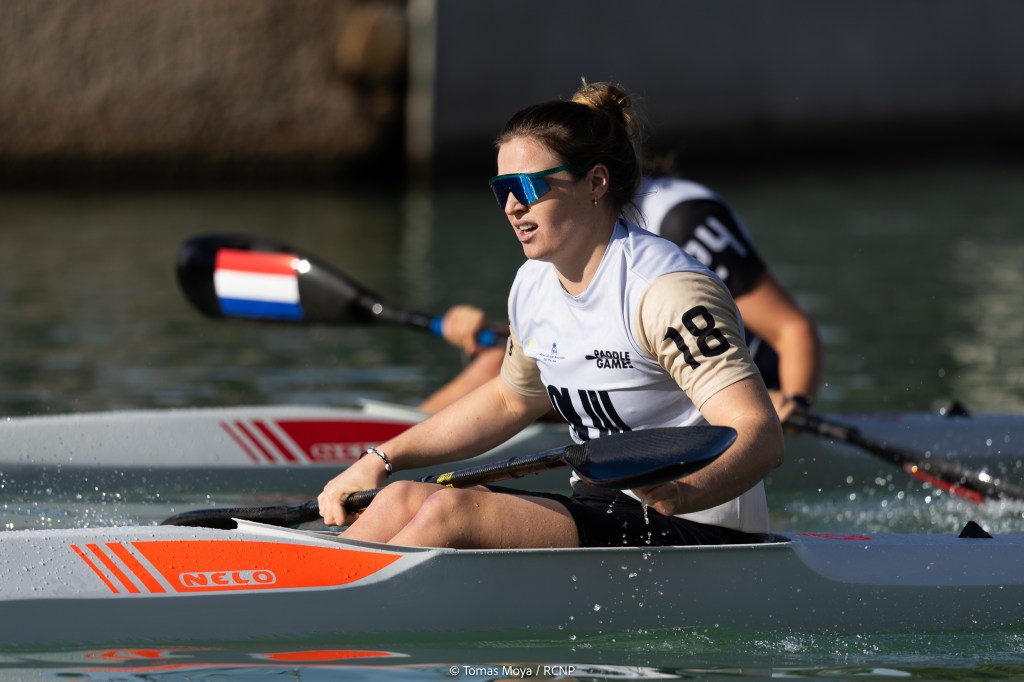
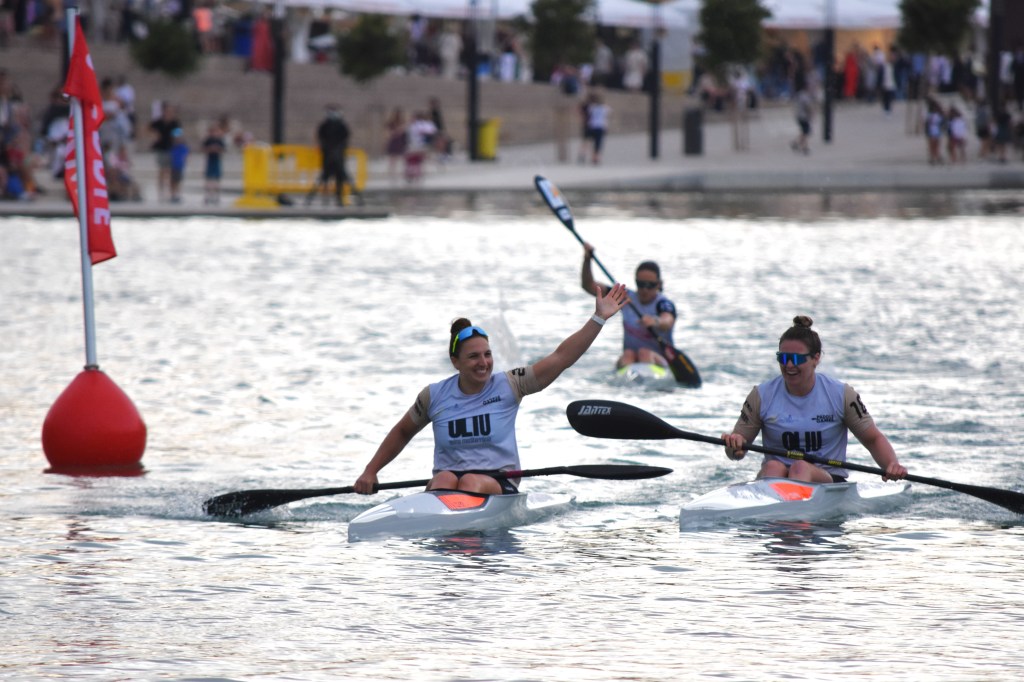
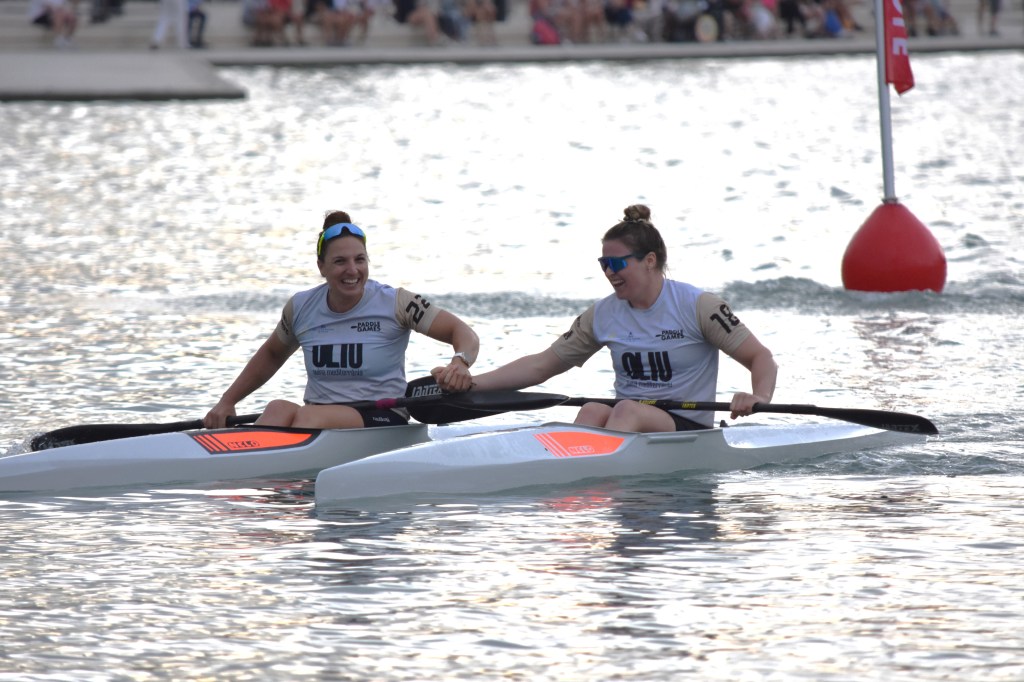
Jule raced in the inaugural Paddle Games and plans to return this year to finish a season which she hopes will see her return to world level racing.
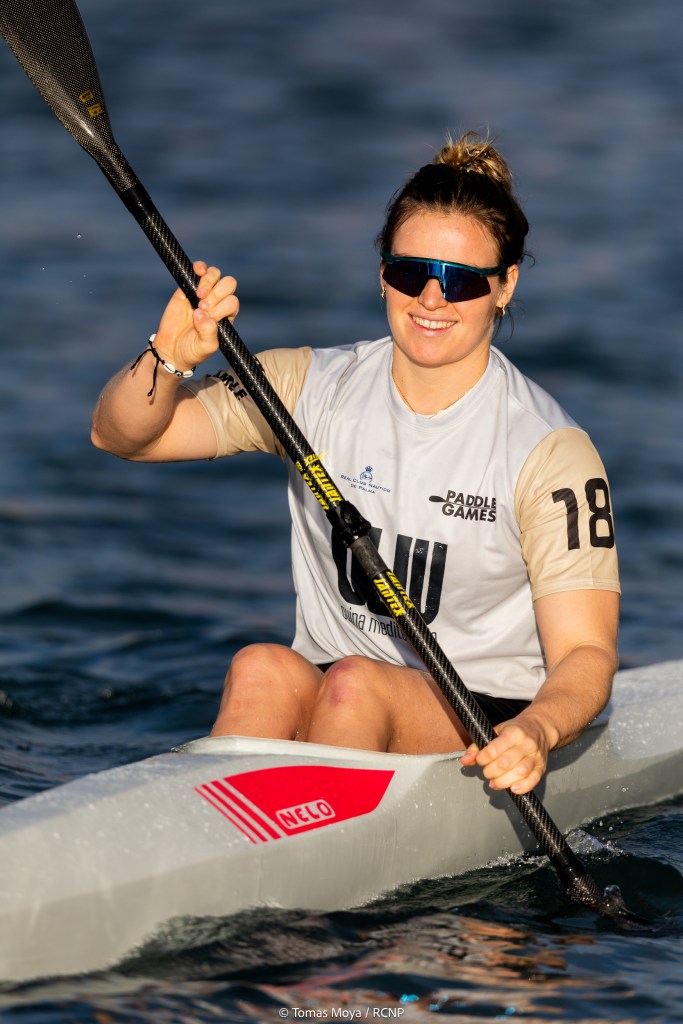
She said: “I just want to show everybody that if you are a mother, if you have recently given birth to a baby, you will be able to get back soon and it’s not a big hurdle to take.”
However, life has changed for Jule. “It’s completely different. Now you have to take care of another human. I’m trying to handle my life the same, but there’s this little tiny human that has to come everywhere you go.”
“In the beginning, I was a little bit afraid we were not able to manage my training with the lifestyle of the baby. But now, after three months, he’s doing really well. He enjoys staying with me at training and seeing the water.”
Jule takes him to nearly all her training sessions: gym, running, and on the water.
“He’s really relaxed so he’s the perfect baby for high performance sport. You always get what you need I think.”
While other elite athletes have made the return to sport after giving birth, including Australian sprint kayaker Alyce Wood, Jule’s decision to train throughout and after her pregnancy has still come with its fair share of concern and unsolicited opinions.
Jule said that many people told her what she could and couldn’t do throughout her pregnancy, but she chose instead to listen to the signals from her body and use that to guide her training, stopping if she felt that something wasn’t right.
“I know that the sport is good for me and also good for the pregnancy and for the development of the baby so I just continued in the way that I felt was good,” she said.
She stopped training completely just two weeks before the birth when diagnosed with pre-eclampsia because she didn’t feel there was enough research to know what impact it might have.
After the baby was born, Jule said that many people suggested she take total bed rest for the first week and wait three weeks before even leaving the house.
Instead, just ten days after giving birth, she went back out in her kayak for the first time.
“Yes, I have to recover. Yes, I have to take care of my pelvic floor. I have to take care of all the risks that are there and to not start too early. But I cannot just stay in my bed. It’s again, hearing my body, trying to listen to all the signs and just trying to enjoy everything. I think athletes in general know their bodies better than any other people in the world,” she said.
Jule is no stranger to making things work in her own way and that is reflected in her junior kayaking career.
She followed her older brother Joschr into kayaking alongside playing football in both a boys squad and a girls squad, and competing in track and field.
By 13, she had decided to specialise in kayaking and Joschr became the perfect training partner, making time to train with Jule, even after long night shifts as electrician.
Jule said: “He brought me to the level that I am now.”
While many athletes set their signs on Olympic glory young, Jule said: “For me, it wasn’t ever clear if I would do high performance sports. Until I was 18, I trained the way that I liked, I was always gifted or talented a little bit, but I was just enjoying the time at home.”
At 17, Jule tried a boarding school for high performance athletes, but decided it wasn’t for her after one week.
This coincided with a difficult period of her life following the death of her father, and she felt the most important thing for her was to be at home with family.
At 19 she made the shift to training as a professional athlete at the Olympic Centrum in Essen, Germany hoping to go directly into the senior team.
Instead she just missed out on making the team and spent two years competing in the under 23 category before getting the call up to seniors, something which she now believes was formative in her career.
“I really think that the two years that I did U23 when I was 18 and 19 were the best years. It was really, really important for me because it was when I was training super hard, trying to get to the world class level, but also not facing too much pressure. It was the time where I developed a lot”
Jule’s first Olympics were in Tokyo 2021. In an unfamiliar environment, hot climate, and in the midst of the covid pandemic, Jule feels that this Games was a learning experience, but she really came into her own in Paris 2024.
“In Paris I was racing at a better level with more confidence and a little bit more mature than in Tokyo. I had a completely different experience. I knew: I am here to fight. I don’t have to hope, I know I am able to fight for the medals. But I had been proving to myself for three years that I am good enough to win a medal and this was the stage for me. My stage to perform and my time to perform.”
Jule walked away from the Paris Olympics with a bronze medal in the Women’s K2 500m event and a silver in the Women’s K4 500m.
One of her most special moments in sport was sharing the Olympic bronze medal with not only her K2 partner Paulina Paszek, but also with the Hungarian K2 crew of Noemi Pupp and Sara Fojt who crossed the line at the exact same time.
“I think this was the proudest moment because it’s not about taking a medal from somebody else. For yourself, you really want to have the medal and you want to be the best. But if you share this moment with somebody else, it’s really nice because we have more people who are happy to celebrate,” she said.
As she plans her post-pregnancy training, Jule is hoping to return to that world class form.
Balancing training alongside caring for her son, she is prioritising flexibility and quality sessions over quantity.
“If at some point he’s interrupting, I take him and I go outside or I have to change the sessions. So you have to have flexibility and it’s kind of hard also for the mind because you plan something, like, you have four sessions a day and in this day you’re not able to do any sessions and you’re like I really needed to train but, in this moment, there’s something more important so I just change.”
Jule’s goal is to return to international racing this year, she hopes to compete at the World Championships and then The Paddle Games.
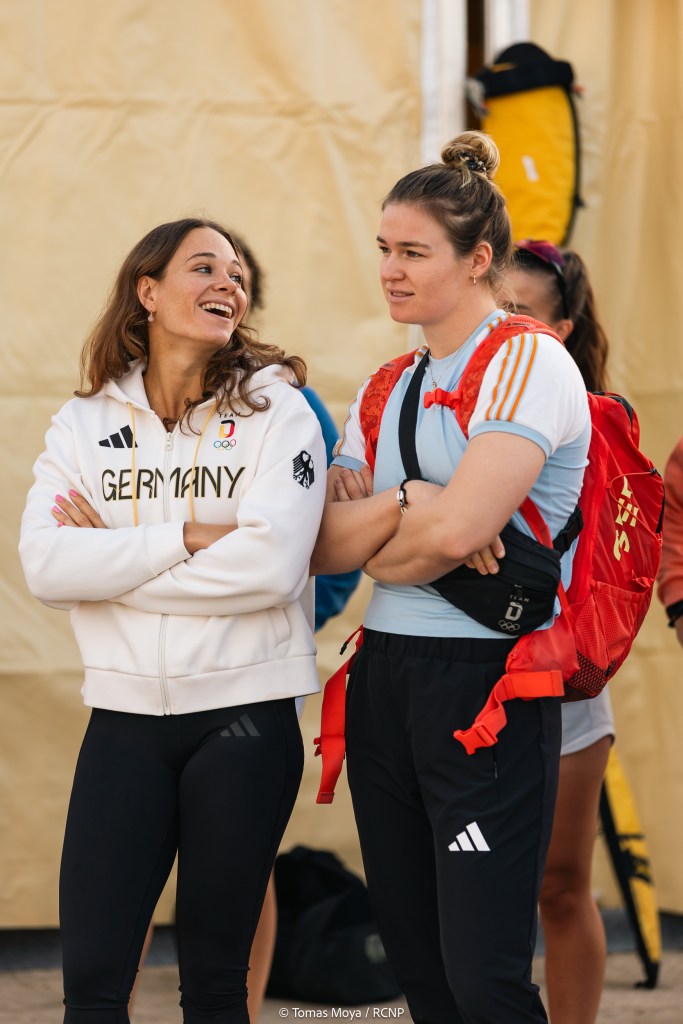
Having competed at the very first Paddle Games, Jule said she loves the original format and is looking forward to something new and special this year.
Last year’s mixed K2 event got her excited about the possibility of more crew boats this year. It has also got her scheming about her dream K2.
Jule said she enjoys mixed K2 but loves to paddle with women. She would love the chance to race with Polish athlete Anna Pulawska, or New Zealand greats Aimee Fisher or Lisa Carrington.
She also loves the originality of The Paddle Games, speaking about her favourite part she said: “I think it’s a new experience of kayaking racing, something that has never been before. Also the turn was so cool. Just something different besides the normal kind of racing.”
As Jule makes her return to racing, and Phase 2 of the Paddle Games gets underway, look out for more athlete stories as we talk to some of the legends behind the sport.


Leave a Reply